
Pennsylvania’s Grid Put on Notice: Blackouts in Our Future
 Monroe Unfiltered
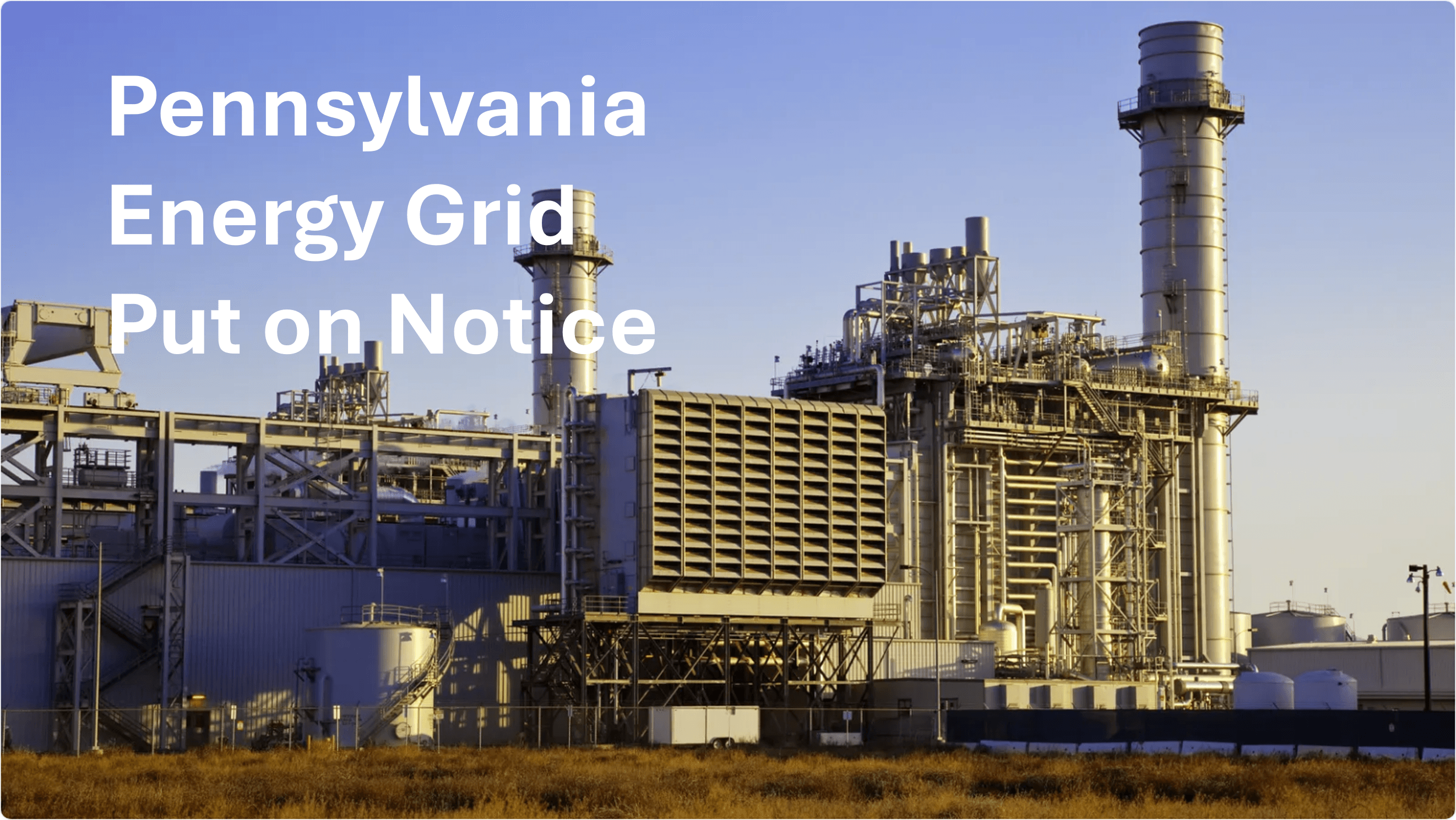
The Pennsylvania Public Utility Commission released a study Sept. 14 warning that data center growth is on pace to push the region's electric grid past its own reliability standard within four years. The study, prepared by Synapse Energy Economics, found that by 2030 the PJM Interconnection grid, the regional operator covering Pennsylvania, a dozen other states, and Washington, D.C., could fail to meet electricity demand an average of six times every ten years, six times worse than the one-in-ten-year standard grid planners actually aim for. In a worst-case scenario of high demand and low supply, that could mean blackouts as often as 13 days a year. Energy consultant Abe Silverman, of Johns Hopkins University, put it more bluntly: “We could be having some sort of blackout once a month on average, which is obviously completely unsustainable.”
It's not just about outages, either. PJM's own spokesman, Jeff Shields, said the imbalance between demand and supply is “potentially compromising reliability of the system over the next five years while also contributing to increased electricity costs.” PUC Chairman Steve DeFrank was just as direct: “Pennsylvania is at an energy crossroads,” he said, adding that “this growth cannot come at the expense of the families and businesses that already depend on reliable and affordable electric service.” Translation: whether or not the lights actually flicker, expect this fight to keep showing up on your monthly bill.
We've been tracking pieces of this fight all year, and the supply side is just as much the story as the demand side. Our own April deep dive, “Watt the Hell,” found Pennsylvania mothballing coal and gas plants faster than it's replacing them: more than 60 coal-fired plants have closed statewide over the past 20 years, per Politico, while roughly 50 new plants have come online since 2006 with an average capacity of only about 250 megawatts, a fraction of what the old coal giants produced (the retired Bruce Mansfield plant alone ran nearly 2,500 megawatts). The state has already had to extend the life of two of its largest remaining coal plants through 2032 just to bridge the gap. Layer four more years of accelerating data center demand on top of a grid that's already losing capacity faster than it replaces it, and DeFrank's warning stops sounding hypothetical.
Back in August, State Reps. Tarah Probst and Maureen Madden stood outside Stroudsburg's Main Street EV chargers pressing state Senate Republicans to act on five stalled bills aimed at energy costs and data center oversight, citing electric bills already up more than 20% across Northeastern Pennsylvania. Smithfield, Pocono, and Middle Smithfield townships have all rewritten their own zoning rules over the same fight at the local level: setbacks, water use, who foots the bill for the power these projects draw. DeFrank's warning is that same argument playing out at the state level, just with a grid operator's numbers behind it instead of a township solicitor's. The PUC established a non-binding model tariff for large data-center customers back in May. Expect this fight to move to the legislature next.
